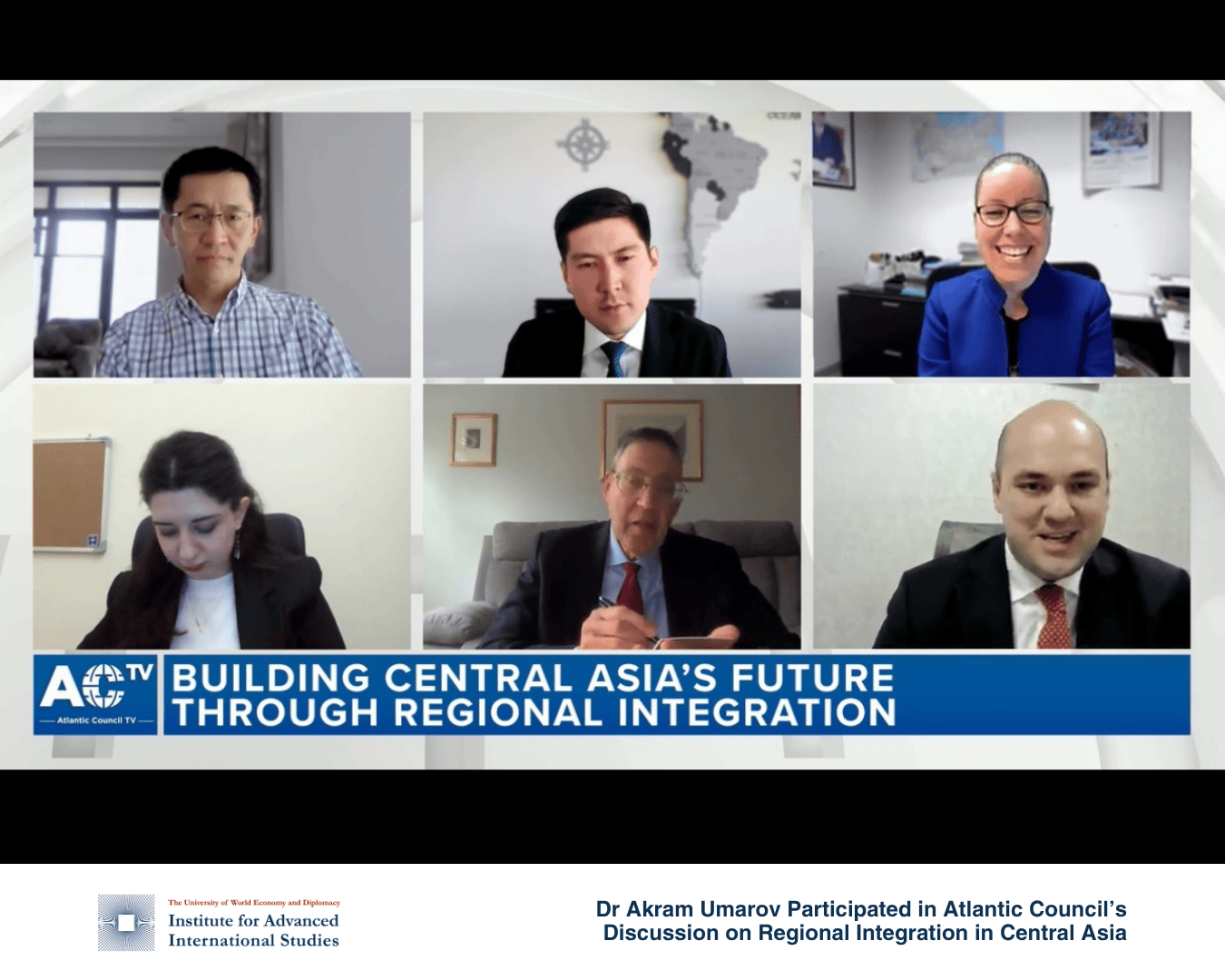
Dr Akram Umarov took part as a speaker in the virtual discussion on “Building Central Asia’s Future through Regional Integration”, held on 3 April by the Atlantic Council’s Eurasia Center. The event brought together experts to examine the growing importance of regional connectivity, cross-border cooperation, and new opportunities for dialogue across Central Asia.
The discussion focused on the economic and diplomatic potential of deeper regional cooperation among Central Asian states. In particular, the organisers highlighted the significance of expanding transport and trade linkages, including the Trans-Caspian International Transport Route, as well as the role of emerging diplomatic formats and institutions such as the Organization of Turkic States and the expanded C6+1 platform, now including the United States and Azerbaijan. The event also drew attention to the Khujand Declaration between Tajikistan, Kyrgyzstan, and Uzbekistan as an important development for border demarcation, regional stability, and future partnership.
Dr Umarov joined an international panel of speakers that included Roza Bayramli, Senior Advisor at the Center of Analysis of International Relations; Emilbek Dzhuraev, Lecturer at the OSCE Academy in Bishkek; Sapargali Shalgimbayev, President of Cfive; and Brianne Todd, Nonresident Senior Fellow at the Atlantic Council’s Eurasia Center. The session was moderated by Ambassador John Herbst, Senior Director of the Eurasia Center.
Dr Umarov’s participation in the discussion reflected the growing international interest in Central Asia’s regional transformation and the role of expert dialogue in assessing its future trajectory. The event provided an important platform for exchanging views on how stronger regional integration can contribute to stability, economic development, and more effective cooperation across the wider Eurasian space.


