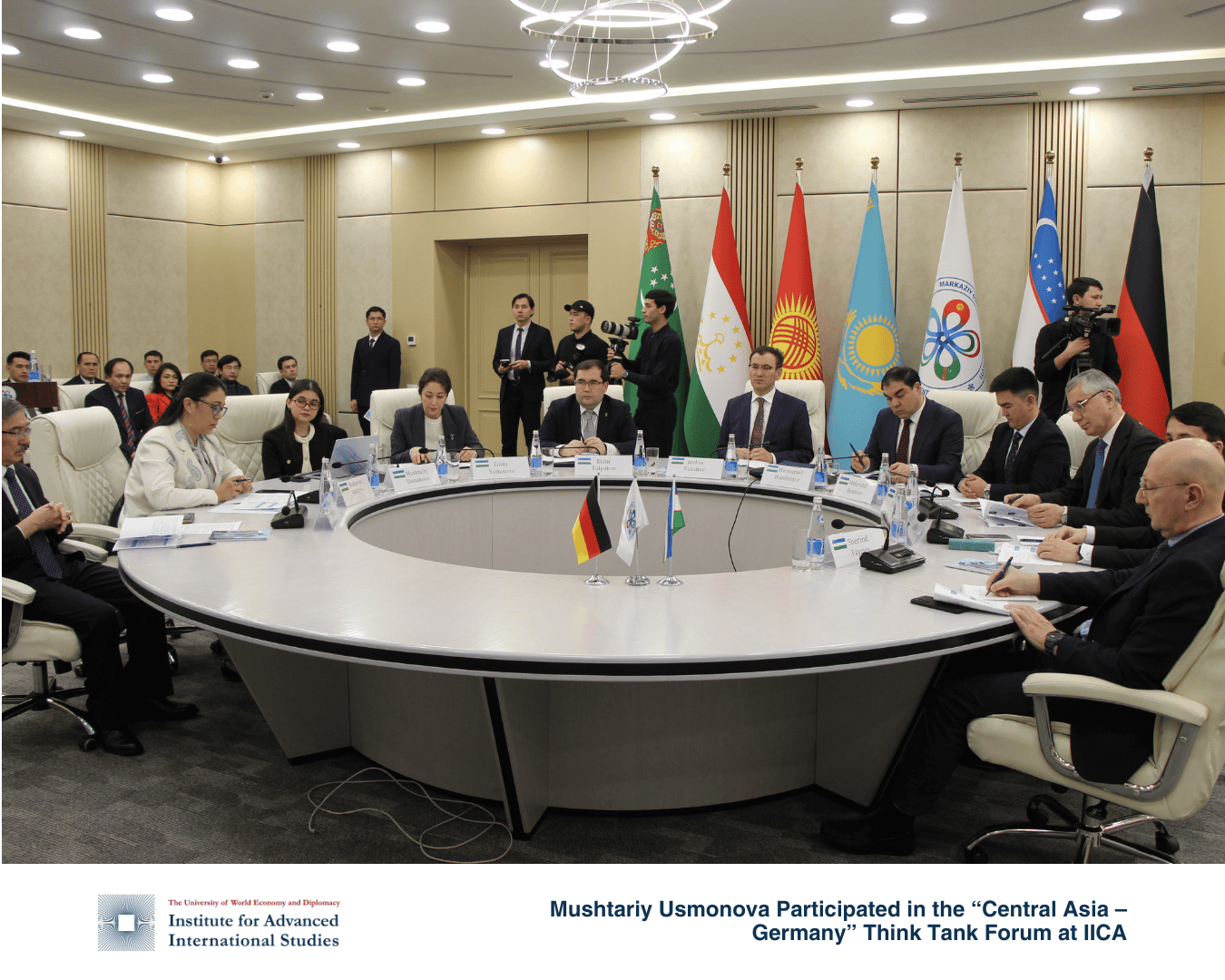
On 5 February, Mushtariy Usmonova, Leading Research Fellow at the Centre for European Studies, took part in the inaugural “Central Asia – Germany” Think Tank Forum, organised by the International Institute for Central Asia (IICA). Forum brought together representatives of leading think tanks, diplomatic missions, academic institutions, and policy-oriented expert communities from Central Asia and Germany.
The event was convened within the broader framework of the “C5+1” cooperation format between Germany and the five Central Asian states, with the aim of advancing strategic dialogue and generating practical initiatives across key areas of interregional partnership. The Forum programme included four thematic sessions addressing economic cooperation and investment, clean energy and critical minerals, transport connectivity and logistics, as well as human capital development and education.
Ms. Usmonova moderated Session 3, dedicated to Infrastructure and Transport Connectivity: Developing Connectivity and Logistics. The discussion focused on transport infrastructure as a strategic enabler of deeper economic interaction between Central Asia and Germany, with particular attention to the efficiency, sustainability, and resilience of logistics networks amid shifting global supply chains.
In her remarks, Ms. Usmonova emphasised that connectivity today extends beyond physical infrastructure and increasingly reflects broader questions of economic resilience, trade diversification, and regional integration. She underlined the importance of addressing not only technical bottlenecks, but also institutional and administrative barriers, including customs coordination, regulatory harmonisation, and the digitalisation of cross-border logistics systems.
The Forum reaffirmed the growing strategic importance of the Central Asia–Germany partnership and underscored the role of expert dialogue in translating political priorities into practical cooperation. The discussions highlighted the value of continued institutional engagement and joint initiatives aimed at strengthening long-term interregional cooperation within the evolving “C5+1” framework.


