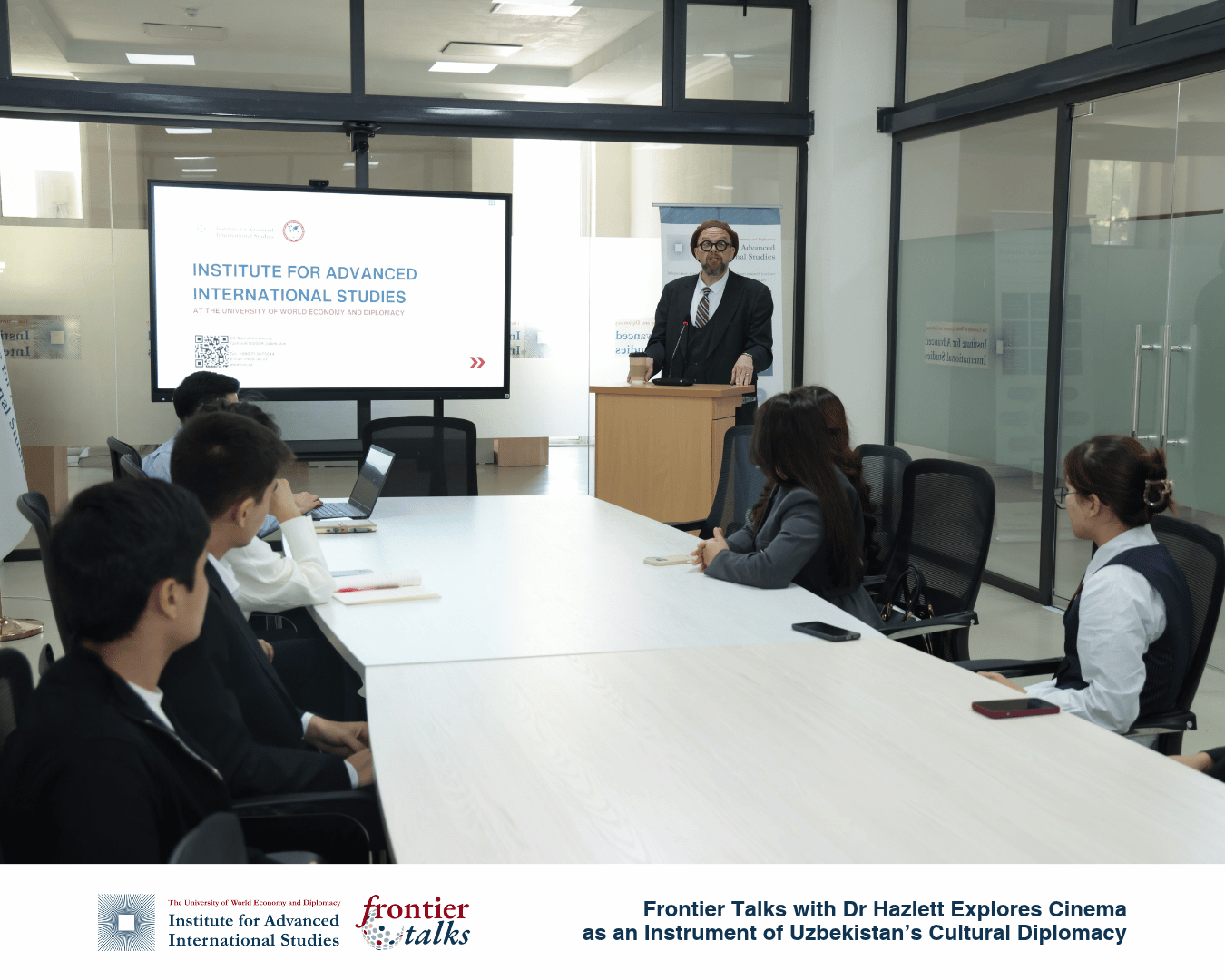
On 22 October, IAIS hosted another session of its Frontier Talks series, featuring Dr Adam R. Hazlett, Visiting Research Fellow at IAIS, Fulbright Specialist and Professor of Humanities at Henry Ford College in Michigan. The seminar explored the role of cinema in shaping international perceptions, promoting cultural heritage and strengthening Uzbekistan’s global cultural presence.
Drawing on Joseph Nye’s concept of soft power, Dr Hazlett examined how cinematic storytelling can foster cultural understanding and influence international audiences. He emphasised the importance of distinguishing between cultural visibility, international attractiveness and actual diplomatic influence, noting that the success of cinematic diplomacy depends not only on audience reach but also on how viewers perceive and engage with a country.
The speaker also presented comparative insights from the United States, India, Türkiye and South Korea, highlighting how different cinematic industries have contributed to international cultural influence. Particular attention was given to Uzbekistan’s emerging opportunities in historical filmmaking, international film production and the promotion of contemporary Uzbek stories to global audiences.
During the lecture, Drx Hazlett introduced the concept of a “Silk Road Screen” model, proposing an approach that combines cultural authenticity, international collaboration and effective global distribution. He underscored the importance of developing internationally accessible films while preserving Uzbekistan’s distinctive cultural identity and ensuring that cinematic narratives reflect both its historical heritage and contemporary society.
The session also addressed the relationship between cinema, tourism and economic development, as well as the importance of artistic freedom, cultural sensitivity and measurable outcomes in developing effective soft-power strategies. The event provided an opportunity for researchers, faculty members and students to explore the growing significance of creative industries in international relations and cultural diplomacy.


