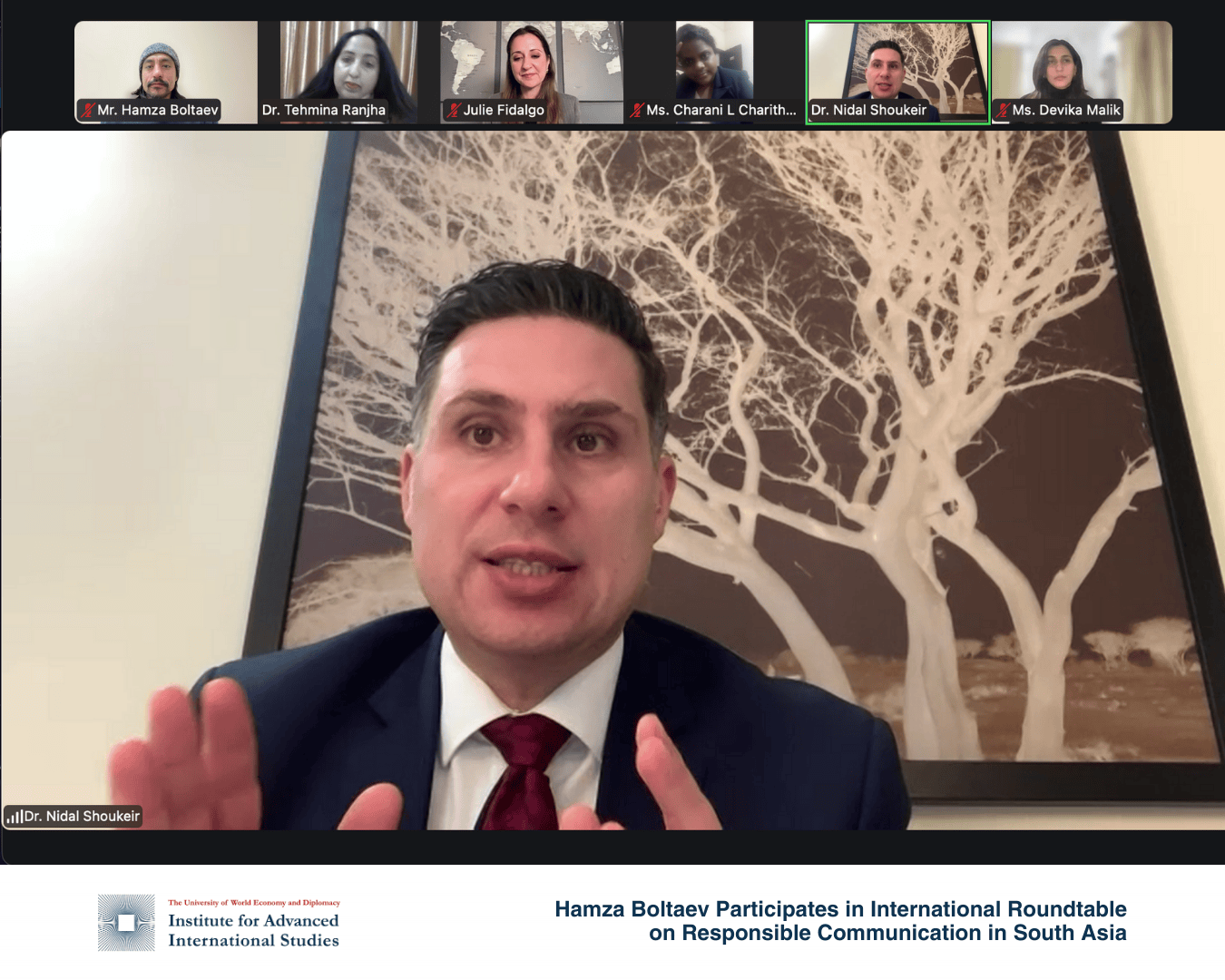
On 16 December, Hamza Boltaev, Senior Research Fellow at the Center for Afghanistan and South Asian Studies, took part in the online roundtable “Responsible Communication in South Asia: Navigating Crises, Conflicts, and Narratives”, organised by the International Committee on Countering Extremist and Hate Speech (ICCEHS). The discussion brought together policymakers, journalists, communication specialists, civil society representatives, and international organisations.
The roundtable focused on the growing significance of communication in shaping public perceptions and policy responses across South Asia, particularly amid recurring political tensions, cross-border frictions, internal conflicts, climate-related emergencies, and rising extremism. Participants underlined that information environments in the region can either strengthen social cohesion and resilience, or amplify polarisation, instability, and violence.
Key discussions addressed the rapid spread of misinformation, the instrumentalisation of identity-based narratives, and the role of both state and non-state actors in influencing public discourse. In this context, the session highlighted a dual responsibility: first, the duty to inform and support communities, especially vulnerable groups during crises, and second, the obligation to prevent hate speech, inflammatory messaging, and manipulative narratives that can contribute to escalation.
By engaging in this exchange, Hamza Boltaev contributed to a broader expert dialogue aimed at identifying ethical, strategic, and practical approaches to responsible and peace-oriented communication, including strengthening media resilience, rebuilding trust between institutions and society, and encouraging cross-border cooperation to reduce the impact of harmful narratives on regional stability.


