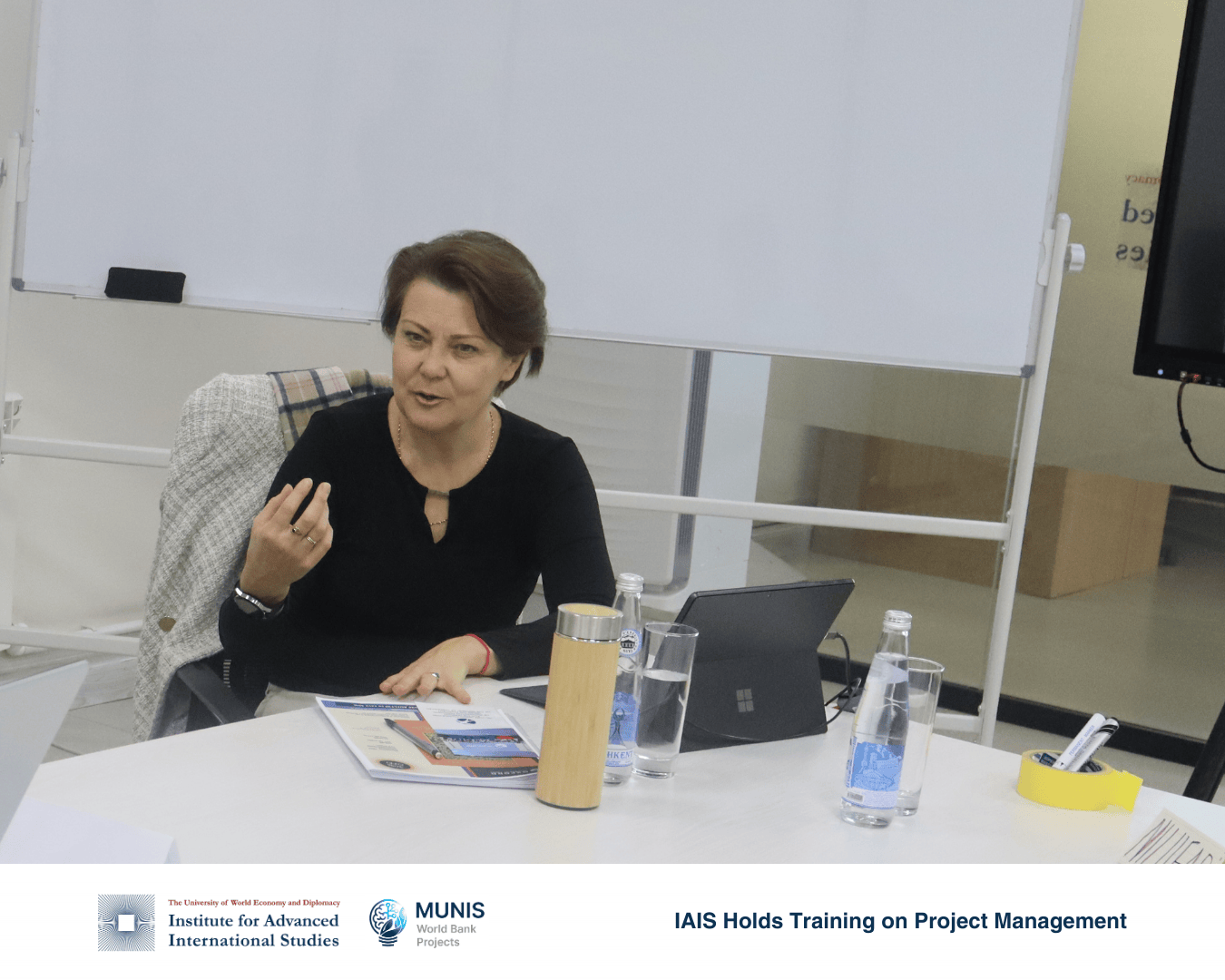
From 12 to 17 November 2025, the Institute for Advanced International Studies (IAIS) at the University of World Economy and Diplomacy held its first project management training. The training was organized as part of the Institute’s institutional development program and implemented under the PRIM grant within the World Bank–supported “Modernizing Uzbekistan’s National Innovation System (MUNIS)” Project. The launch of this training marked the beginning of a systematic effort to improve management processes and introduce modern project-based approaches into the Institute’s operations.
The program was initiated in response to IAIS’s growing need for effective planning and implementation of research and administrative projects, including international partnership initiatives and participation in grant programs. Establishing a unified methodological framework and strengthening staff competencies in this area were identified as key conditions for enhancing IAIS’s competitiveness within the scientific and expert landscape of Central Asia and beyond.
The sessions were conducted by Professor Elena Korosteleva, Director of the Institute for Global Sustainable Development (IGSD). She focused on core aspects such as full-cycle project management, defining strategic objectives, distributing roles and responsibilities within project teams, ensuring effective communication, and assessing and mitigating risks. Participants engaged in a series of interactive modules involving project scenario modeling, development of project maps, discussion of common management challenges, and the search for optimal solutions. This approach enabled attendees not only to acquire theoretical knowledge but also to adapt it to IAIS’s practical needs.
During discussions, participants emphasized that the tools and methods presented would support more precise planning of timelines and resources, increase process transparency, strengthen accountability at all project stages, and improve coordination across departments. It was particularly noted that standardizing monitoring and reporting processes would be an essential step toward IAIS’s long-term participation in international research consortia and dialogue platforms.
The completed training represents an important milestone in strengthening IAIS’s institutional capacity, laying the foundation for a sustainable project culture and enhancing staff preparedness to manage large-scale and interdisciplinary initiatives.
Moving forward, the program will continue with subsequent modules aimed at developing skills in monitoring, analytical reporting, and strategic project oversight, enabling the Institute to transition to a more systematic and results-oriented management approach.


