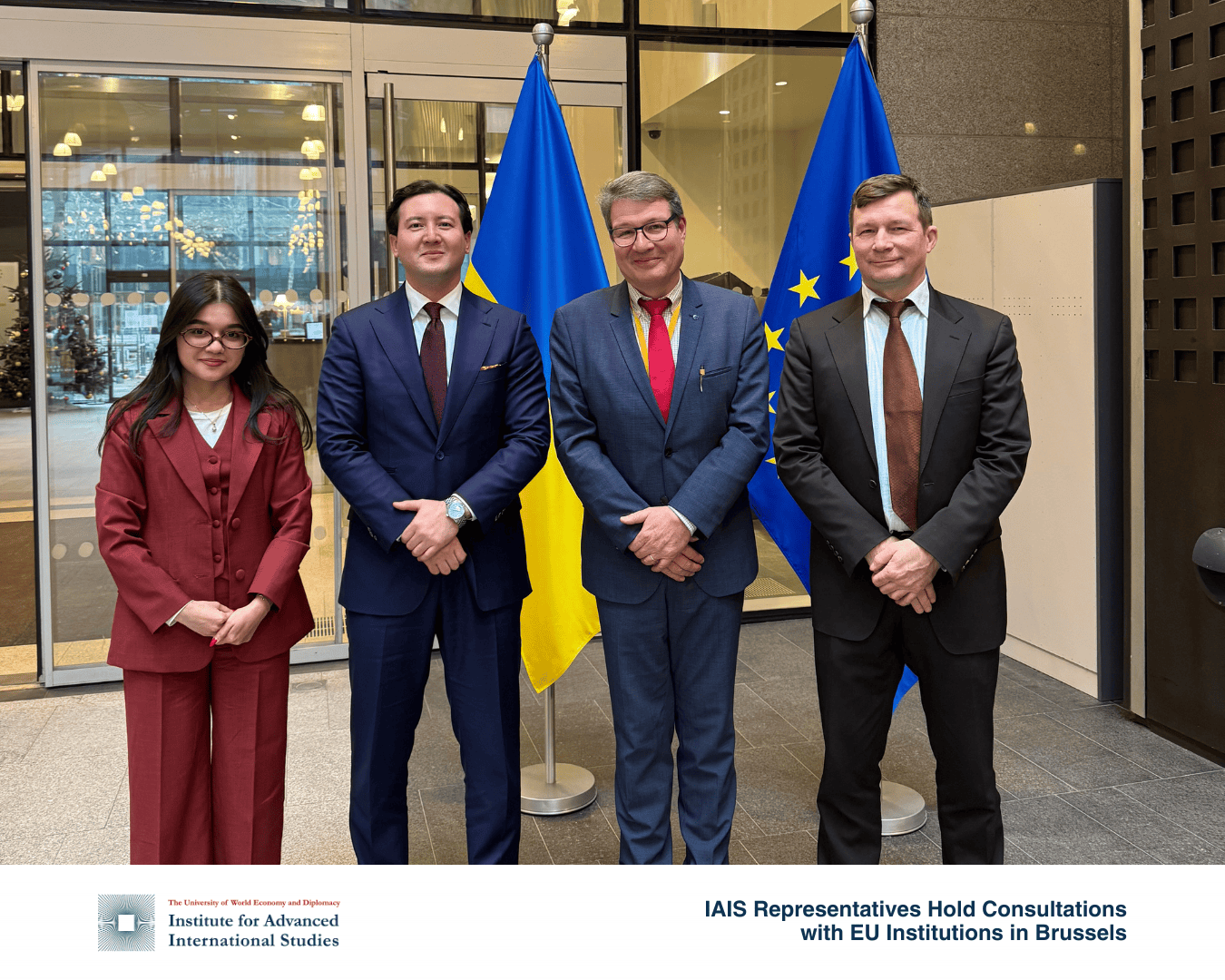
From 1 to 8 December, Odil Gafarov, Deputy Director of the Institute for Advanced International Studies (IAIS) at the University of World Economy and Diplomacy (UWED), and Mushtariy Usmonova, Leading Research Fellow at the IAIS Centre for European Studies, undertook a working visit to France, the Netherlands, and Belgium to expand professional links and explore cooperation formats with European research and policy institutions.
In Belgium, with the support of the Embassy of the Republic of Uzbekistan, the delegation held a series of meetings with officials from EU institutions. These included consultations at the European External Action Service (EEAS) with Dietmar Krissler (Head of the Central Asia Division) and Erik Somelar (Uzbekistan Policy Offier), as well as meetings at the European Commission’s Directorate-General for Research and Innovation (DG RTD) with Bojan Grlaš and Kremena Mileva, and at the Directorate-General for Education, Youth, Sport and Culture (DG EAC) with Tine Delva.
Discussions centred on the evolving foreign-policy context affecting EU engagement with Central Asia, including regional integration dynamics and broader regional developments, and considered practical avenues for expert-level interaction through thematic projects and consultations. At DG RTD and DG EAC, the conversation focused on pathways for more active participation of Uzbek institutions in the EU’s “Horizon Europe” and “Erasmus+” framework programmes.
The Brussels programme also included an exchange with Ivan Botucharov, adviser to MEP Reinhold Lopatka (European People’s Party), which addressed the interlinkages between energy policy, water and climate risks, and transport connectivity in the EU–Central Asia agenda, alongside institutional considerations related to forthcoming EU budget priorities.
The visit concluded with a meeting at DG INTPA with Charlotte Adriaen and Ingrid Cailhol, focusing on the future of the EU’s investment and project engagement in Central Asia and on the “Global Gateway” initiative, including priority areas such as critical raw materials supply chains, digital transformation, energy, and transport corridors.


